
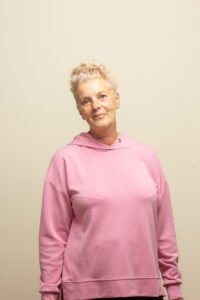
Simon [00:00:01]: Simon Perry here in Newport for the Flame Keepers project, oral history project, and I’m with
Sue [00:00:09]: Sue Tout
Simon [00:00:11]: and Sue, thank you for giving us time today and agreeing to chat about working at Ronsons.
Sue [00:00:18]: It’s a pleasure.
Simon [00:00:19]: Can you tell me what was well, what year, what? When were you born? And where were you born?
Sue [00:00:26]: I was born in St Mary’s Hospital in Newport on the Isle of Wight on the 24th of June, 1959. My mother was a assistant, I think, in Woolworths in town in Newport and my father was a long distance lorry driver for Mews, which was an Island company in Westminster Lane. And I spent all of my childhood and up until I got married in Newport at the same address, going to school at Nine Acres to start with, which is still there, and West Street, which is not there anymore and is now a block of flats. And then I went to Nodehill Middle School, which is now the Newport Sixth form. And after that, I went to Carisbrooke High School, and finished my schooling there, I think. And then had to think about where I was going to work.
Simon [00:01:40]: And what were your mum and dad’s names?
Sue [00:01:42]: My mum’s name was Elizabeth Ann Lee, when before she married, and my father’s name was Raymond Percy Smith. My mother came from one side of the river of Medina and my father came from the Little London side of the river Medina and still lived at the bottom of Hillside Road in Newport, which was by the river Medina and would never move from there.
Simon [00:02:15]: Right. And they what was life, do you have brothers and sisters?
Sue [00:02:20]: Yes, I had a brother. He was five years younger than than myself, and I would say that I probably didn’t have as much to do with him because of the age gap. I was already at school when he was born. But yeah, no, he was good brother.
Simon [00:02:41]: What was that growing up like then so early years? What are your growing up..
Sue [00:02:46]: Growing up was I feel like I had a really happy childhood, although we really didn’t have a lot my mum and dad didn’t have much money, and my dad was a very keen fisherman, so we usually had a lot of fish, fish for our meals, which he’d caught, or he’d been rabbiting or shooting pigeons, that sort of thing. Our clothes were either handmade, hand knitted or second hand, or if we were really lucky on birthday or Christmas, then you would have something new. So we were really happy with what we got. If we got a bike which was second hand, or any, anything like that then we were amazed that we had that. My nan that lived in the same road with my grandfather, they owned Holyrood Galleries, which was a picture shop in Newport, and they were slightly better off than us. So any treats that we had usually came from them, such as, I was really keen on horse riding, and they would pay for me to go horse riding. And also their daughter, my auntie, she had her own horse. So we, we were lucky enough to, you know, have things like that, which were a real treat, but other than that, but I would still say we were very happy childhood, growing up. Teenage years, great fun. You could go out anywhere on the Island, teenage years, there were lots of nightclubs, wherever you wanted to go, much more than now, and it was just a really fun time. I think people, most people, would come from the poorer background and just to go out for, you know, and have a couple of drinks or meet somewhere and have have a bottle of wine or whatever, just something simple was a real pleasure. And I think everybody seemed to not expect so much out of life. And you were, you were happy with the small, small things, to be honest. Yeah.
Simon [00:02:46]: Just sounds that’s fantastic, a lovely way to grow up,
Sue [00:02:46]: I think so. It was very carefree, and you didn’t long for the, obviously, you didn’t long for the massive telly, you know, the telephone or the computer, because it just wasn’t available. You know, most things, most things or events you went to were family events. You know, like fireworks were not a big display. They were in someone’s garden, you know, and just just small, small things like that, you know, you do get together and you’d go to the beach, or just just normal things that were all very pleasurable. At that time. And I, I think now people are not happy with that sort of thing. It wouldn’t be, you know, exciting or good enough,but for us, it was so in general, we were all really quite happy.
Simon [00:06:31]: And school was an enjoyable time?
Sue [00:06:33]: School I hated, I did, absolutely hated school.
Simon [00:06:37]: What was it you didn’t like?
Sue [00:06:41]: I don’t really know. I think probably because I, there were subjects that I was really interested in, like English and history, the others, especially maths, which I had real difficulty with, I didn’t want to go to those and chemistry, that sort of thing, I wasn’t that interested in so, and I think quite a lot of us didn’t like going to school, so we used to not go to school, and we’d go to the park or whatever, and we’d skive a day off and or we’d go to the swimming pool, because we were lucky enough to have a local swimming pool in Seaclose Park, which was only obviously from May, I think it was May through ’til, I suppose once it started getting really cold. We you could go there and spend the day, and it was great fun, because you could, you could actually have fun at the swimming pool. It was probably not health and safety, but we had diving boards, high diving boards, spring boards, and it was just a great time, you know, to do that.
Simon [00:08:00]: When, when it came to sort of the end of school, your thoughts, what did you think about further education? Or do you think about work, or what was the driver there?
Sue [00:08:11]: I think, but I don’t, I don’t know whether I’m right or whether or I’m wrong, but in my mind, I sort of thought about maybe doing something secretarial might be interesting, but there weren’t very many places at the local college for that, that sort of thing. I think you had to be, you must have, had to have had quite good exam results, and then you you could either go or you weren’t good enough. So I didn’t get a place. And so as we had so much industry on the Island, I decided that I would just go and work in a factory, because they actually paid quite good money as well, and you didn’t need to be skilled. So I had, I had an interview at Osborne electronics, which was in Binstead. They were making printed circuit boards and actually, quite a few of the girls that I went to school with had gone there, so we all used to get the bus there, but I, I found it to be a very old fashioned, unfriendly, possibly bullying place, and I walked out after six months, and that’s when I decided to apply to work at Ronson’s.
Simon [00:09:41]: So what was the year you went? You left school to go to Osborne?
Sue [00:09:44]: I think it was 1975 that I went there. It could have been 1974.
Simon [00:09:53]: And that was doing what? Making the circuit boards, soldering and the like?
Sue [00:09:58]: Yes, I used to sand blast the actual wires on the resistor for any of the like enamel, and then I would dip them into solder so that they were covered and clean. It wasn’t a very healthy place I would say, the fumes from doing that actually did affect my eyes, and I had an infection from that which, if I’d been happy there, I would have just gone to the doctors and got rid of it. And it was just another reason that I didn’t want to work in that place anymore.
Simon [00:10:21]: And you say, you got the bus there, and so when you shifted to, what was after Osborne?
Sue [00:10:43]: I then applied at Ronson.
Simon [00:10:45]: Okay, how did you get to hear about the possibility of work at Ronson?
Sue [00:10:50]: I think my mum knew somebody that was working there. And I think my mum arranged an interview for me, which I went to, and obviously I was taken on. I can’t remember if I started that week or the next week after, but they provided t ransport from quite a lot of different places on the Island. I used to just go to Newport bus station. The Ronson’s bus was there, and they took you to Ronson and dropped you off and then when you came out in in, you know, tea time, they were all waiting there for the different parts of island for those that didn’t drive, or whatever. So it was, it was quite well organised. Actually.
Simon [00:11:42]: What was the atmosphere on the bus like on the way in?
Sue [00:11:45]: It was, it was very chatty, because everybody was very friendly at Ronson’s. There was no atmosphere or no, I don’t feel like there was any difference between the levels of management, down to the people that actually you know worked on the lines or or the other the jobs it was you were, you felt like you were all on one level, very friendly, very sociable, very sociable outside of work as well. And lifelong friends were made there as well.
Simon [00:12:30]: And chatting to somebody else about the bus on the way in, she was saying that there was a sort of a divide between the Ronson girls and the Dixon girls, sort of like, you know, sort of, who do you think they are?
Sue [00:12:45]: I don’t actually remember that, because I don’t actually remember the Dixons girls. I think probably because there was a few, a few of us that used to meet there every morning you just chatted with, you know, the group that you chatted with. I actually don’t remember the Dixons girls, although I did work at Dixons just for a few months, and I would say they were no near, nowhere near as friendly as the Ronson’s people.
Simon [00:13:10]: Okay,
Sue [00:13:15]: Yeah, I couldn’t tell you much about Dixons because it was a very nothing job. Nothing made an impact on you.
Simon [00:13:25]: So what was the job you applied for at Ronson?
Sue [00:13:29]: It was to work on the production line for the cigarette lighters. And obviously, I got the job, and they had a separate sort of small conveyor belt line, which they trained you on. There was a very nice lady that trained you in how, how, how it would be, you know, and the speed that the conveyor belt worked at, and the different types of job you you could possibly be doing on that. The thing that I found quite, not difficult, was when I first sat by it, it felt like it was you that was moving, and not the conveyor belt, which was quite sort of disorientating. But you soon got used to it.
Simon [00:14:05]: Because it was constantly shifting front of your eyes. It felt like ..
Sue [00:14:24]: It went down by the side of you, and the workers were sat either side different jobs, yeah. So it was constantly going by the side of you, and that your your your eye caught, you know, that slight movement, and you couldn’t quite tell whether it was you moving or the or the conveyor belt, but you you quickly get used to it.
Simon [00:14:49]: And that they had a special practice line set up.
Sue [00:14:51]: Yes, yes, they did. It was a very much smaller line that that was just used for training and the actual, the actual line that they made them on was just across like the factory, not very far.
Simon [00:15:09]: How long did you do the practice one then for?
Sue [00:15:11]: I can’t actually remember. I don’t think it was very long. I think it was maybe a couple of weeks you were on there.
Simon [00:15:18]: You were still making lighters, but just at a different speed?
Sue [00:15:20]: Yeah, yeah. You were just shown all the jobs, and you, you made it, you know, you each, each job that you, you would do. And then after, you know, my training period, I went on to the actual line, and I learned those, you know, those jobs, met those people, made those friends. And it seemed to be, it seemed to be the same people, right from when, you know, the seven years that I was there. I mean, you might have had one or two, might have married and left, but I don’t really remember. I remember the two ladies, two older ladies that were the first job on the line, and they were, they were, they were almost they were real characters. They were old, old school ladies with their perms and their dresses and their handbag on the table. And I do remember them very well, but they were also also friendly. And actually some of the girls I had, I remembered from school, I think a couple of them had been a bit older, so some of us sort of knew each other anyway. And I suppose most people came from Newport and most people, sounds silly, but people used to know each other in their roads and their schools and through their parents meeting at school. So you knew a lot of people from around your area. So you sort of may have knew them by a sight, or, you know, you’ve been to school with them, or you know, you might have been a bit younger than you or a bit older than you, but you knew who they were, so you all were very familiar to start with. And obviously there were other people from other areas of the Island that I hadn’t met before. But in the end, the whole line knew each other, were friendly with each other. We socialised with each other. We went to each other’s weddings, Christmas parties, and the two actually the two old ladies who were at the beginning of the line, they were big wrestling fans. So we used to go to Ryde Lind Street. What is it? The Council offices. Council place there, it’s now closed. They used to have the wrestling matches there.
Simon [00:15:21]: The Town Hall.
Sue [00:15:21]: Yeah, the Town Hall. We used to go to the Town Hall and watch the wrestling matches with them. And they those two ladies were the sorts of ladies that hit the wrestlers with their handbags, because, because they wanted the other one to win, or whatever. But, yeah, they were really funny, those two ladies. But there were, there were a lot of characters that I worked with there.,
Simon [00:16:40]: It’s funny isn’t it, when you’re young, everyone seems old. What? When you’re saying that, you know, the older ladies, what do you think they were actually?
Sue [00:18:45]: I tried to think, I think, I think, I think it’s because they they still had, like the most of us, younger people would sort of go to work, and you’d have jeans and a T shirt and that sort of thing on, but they still had, like the purple rinsed permed hair and, you know, perfectly set the dress, yeah, perfectly set and the dress and the tights and the shoes and the handbag and, you know, that sort of thing. They were probably, I reckon, maybe 50s.
Simon [00:19:19]: Okay,
Sue [00:19:20]: Early 50s like that.
Simon [00:19:22]: Yeah,
Sue [00:19:23]: yeah,
Simon [00:19:24]: which obviously, at the age of 17 is impossibly old.
Sue [00:19:28]: Yeah. I mean, they were great fun to be honest. You know, there was nobody there that was, what I would say was, like old fashioned or a stick in the mud, or whatever. We had two, two supervisors. One was Pat she was Irish, and Brenda was an Isle of Wight lady, I think. And they, they like organised and, you know, controlled what went on on the line and but we, we just had such a laugh all day at work, because you were usually sat next to or opposite somebody that you knew. And we just you were allowed to smoke, you could eat, you had, like, your own table. You could do that there. We had, they were allowed to have the radio on, which was a great bonus, because we all liked, you know, like Radio One or whatever, but you were only allowed to have it on over the tannoy for specific hours because of broadcasting rights. So, we all used to be, come on, put the radio on, put the radio on, but yeah, most of the time, you know, we just like be chatting, or you chat all day. And they, they had the most fantastic canteen there as well for tea break. I think we had half an hour in the morning and half an hour at lunchtime break, if I remember rightly. But you, you could go and have a bacon sandwich, or they did, like egg mayonnaise rolls, hot sausage rolls and all that, anything you wanted for breakfast sort of thing. And then at lunchtime, you could get any type of proper lunch, you know, it would be meat and veg. It was just really, really a good canteen, and it was obviously a discounted price. So
Simon [00:21:26]: right?
Sue [00:21:27]: You could do that. A lot of us used to go and sit, in if you if you had a car, when we started driving to work, we might go and sit and have a picnic in the car, because in the car park at the behind there is obviously Parkhust Forest, and there’s quite a large community of wild cats. And you start off by like throwing a bit of food in there for them, and then they they’re not friendly, but they will come, and they will bring their babies and show you, and then go.
Simon [00:22:04]: Wow.
Sue [00:22:05]: But so, so we used to sit and, you know, chit chat out there and have a cigarette or whatever, and yeah, so some of us used to do that, or we’d go into the canteen.
Simon [00:22:19]: What sort of size was a canteen. Everyone who worked there could all get in the canteen at the same time?
Sue [00:22:24]: Yeah, if you wanted to, yeah, you could. I suppose you could probably, maybe, maybe some of the other sections had a different tea break time. I’m not certain, because I worked on the cigarette lighters. But we also made blow torches, which was another area that I didn’t really know the people in there, that was mostly men. And then there was another section upstairs that made some sort I think I don’t know if I were called purer filters, they were a filter that you smoke your cigarette through that supposedly took out anything that was nasty. Then obviously you had the management and that sort of you know thing. So maybe they had different breaks because they worked different hours, I’m not sure, but you could probably fit about 40 people in there for a meal at one time. And as I say, some people would sit outside. And you know, it depended just on the day. But yeah, no, it was an excellent canteen.
Simon [00:23:31]: Why do you think the lighters was a female, mostly female, and the other ones, the blowtorches, was mostly men?
Sue [00:23:40]: I think because it was probably heavier work and heavier dirty, and I’m not sure whether it was called the die casting area. I don’t know about die casting, so I don’t know if you needed some sort of skill or training or I know it was in an enclosed area. I don’t know if you know the dust, and I don’t know if it was more of a man’s job than a woman’s job at that time. And maybe it wouldn’t be now, but at that time, it seemed to be.
Simon [00:24:15]: I guess die casting is probably liquid metal.
Sue [00:24:18]: Yeah, I don’t know.
Simon [00:24:19]: Yeah. So what was your role? Did you have the you went in on one particular role on the line, or?
Sue [00:24:28]: Yeah, you the two old ladies that I’m always on about, they, they never changed their job. They stayed on those two jobs and to set the line going, and then you were given a job. And then once you, once you knew all the jobs between you, if you fancied a swap, you could say to somebody didn’t want to swap after tea break, do you, I’m getting a bit fed up with that. And they either would or they wouldn’t, but you could swap round. So there was you could. Do any of those. Also, they had two girls, which I did this job at one point, called a float. So that was, if anybody needed to go to the toilet or anything like that, they would come and take your place while you went and did whatever you were doing.
Simon [00:25:18]: So they knew all the roles inside out.
Sue [00:25:19]: Yeah, you had, yeah, you had to know all the jobs. And then at the far end of the line, where everything sort of was finished, you had the rectification area, which was where you put any problems right. I did that for a while, and then behind you would be the inspection ladies, that would inspect that, yes, everything was okay and it was suitable to go through and be packed on the other side. I never did that job, so I don’t know anything about the packing area. So over the whole of the line you went from, I don’t know how many bits that made up the lighter, 40 bits say yeah to a finished product? Yes. Yeah, yeah, and they were polished and cleaned before they went through the inspection area and were packed. Everything was, so sometimes we did, like, your just general lighter and sometimes it would be a special order, where they might be leather covered, or, you know, something like that. So you had to make sure that those were, you know, really, you know, really good quality work on those. But yeah.
Simon [00:26:33]: It was all one lighter, was it?
Sue [00:26:35]: Yeah, it was one style. Yeah.
Simon [00:26:38]: That’s the ones I’ve seen is the Comet, which has got a sort of shiny top?
Sue [00:26:47]: Yeah.
Simon [00:26:48]: And maybe shiny at the bottom, and that big button on the side.
Sue [00:26:54]: That’s it, the comet that we mostly made, I didn’t see anything else being made, not in the lighter, you know, sort of section.
Simon [00:27:05]: Can you remember what the different roles were going down the line?
Sue [00:27:08]: Yeah, I sort of can. The first thing you did was, because they, what they did was they gave you a tray with on the start, with the shells in, then you put in the side button and also that had like a V shaped metal that you pushed down inside, which obviously that made it click in and out. And then I think it went to a lady that put, like a metal arm inside on the actual piece where the gas went through it, and a circle clip to hold it on. And you also had a little plastic block that went to one side that held the two flints.
Simon [00:27:59]: Right, and the spares that they carry?
Sue [00:28:02]: Yeah, the two spares inside. And I think then it went on to a machine where you actually put the shiny silver top on which was opened, and you put that in upside down. And all you had to do is it was like a big perspex tower, actually, you put it in upside down, shut the door on, opened the door on it. That was an easy job, and that had fitted the shiny top to the metal bit that was in there for it to go on.
Simon [00:28:24]: Clamped, squashed it down to click it in?
Sue [00:28:29]: Yeah, it sort of clamped it together.
Simon [00:28:33]: So there’s a bit of health and safety there, making sure you’re not crushed underneath the machine.
Sue [00:28:41]: Oh no, it’s only a tiny, tiny it was on your desk in front of you. It just had a little door that slid open, and you put that in with the lid under the metal bit, you shut the door, and then that pressed it, and then you open the door and you could take it out. And then I think after that, I think you had to be able to shut and open without damaging the actual body. I’m sure there was a job there doing that. I’ve forgotten some of the jobs, but there was, like, cleaning. You had to clean them. You know, you had, like, I think it was small, small, almost like a rubber, which would rub any mark off. And then you had, like a cloth that you clean, you know, you cleaned it with. And from then on, people wore gloves, you know, to touch them, obviously. They filled them up with gas as well. And then they went through to either inspection or the rectification thing, and packing.
Simon [00:29:48]: One of the roles I heard of was a flame setter.
Sue [00:29:52]: Yeah, yeah, I could do that, because you had to be able to do that if you in rectification because sometimes the flame would be too small, or sometimes the flame would be like a blowtorch, and you had like a long tool, a long, thin tool with just like a little half circle end on it, and you could put it into the front of the lighter and alter the valve inside as to how much gas that let out. And I forgot that was one of the jobs as you on the way down, was you put a screen in front of the hole and slid in, so there was no hole.
Simon [00:30:39]: Where’s the hole?
Sue [00:30:40]: You know where, on the front of it, it would have been a front it would have had the top, the click button on the side, there would be like a little grill just under and that grill was called a screen, and you could take it in or take it out, so you had access to that valve inside, so you could alter it. Yeah, so that was another one of the jobs on the way down the line, was putting the screens in. And I do remember that hurt your fingers.
Simon [00:31:11]: Because it was fiddly, or because you had to push it in?
Sue [00:31:12]: Yeah, it was quite tight. And, you know, to get it in, not all of them, some of them just slid in. But that’s just reminded me of when I first started there, some of the jobs really hurt your fingers because you’re not used to doing the repetition. So you ended up with, like, the tape, tape all your fingers taped up for ages because, you know, they were getting really sore.
Simon [00:31:36]: Until the sort of your skin I guess …
Sue [00:31:41]: You got used to it, yeah, then you could, you could do it all.
Simon [00:31:46]: Yeah. So how many roles were there down the line? Sounds like loads.
Sue [00:31:52]: Yeah, it was really, let me just think, it was probably those two ladies were doing the same. There’s probably 10 either side, I reckon 10 either side of the the conveyor belt
Simon [00:32:10]: And the people opposite each other were doing the same thing?
Sue [00:32:14]: Yeah.
Simon [00:32:14]: The same function or whatever?
Sue [00:32:16]: Yeah, because I think the lighters came down in twos. So one would do this side, and you know, sometimes you do both of them, and then sometimes you couldn’t keep up with it, because you couldn’t get the screen in, or you couldn’t do something. And then you’d be frantically putting them into a tray, and one of the floats would come and help you. And
Simon [00:32:38]: All right, so if you if you couldn’t keep up with the line, you sort of put them to the side,
Sue [00:32:42]: yeah,
Simon [00:32:42]: to then keep the line running?
Sue [00:32:44]: Yeah. It never stopped, it didn’t stop.
Simon [00:32:48]: Did that feel difficult having a sort of pressure to have the line going?
Sue [00:32:51]: Only when you when you’re new, I think, because you knew, once you’d been there a while, you knew it wasn’t really a problem, because the float would collect up what you’ve taken, what you’ve put in a tray, and it would get sorted out. But when you’re new, it was a bit of a panic, like, oh my god, I can’t do this. They must be thinking, I’m useless, you know. But there were just sometimes some of the things didn’t quite fit properly, or, you know, so you struggled to do that, but it was okay.
Simon [00:33:15]: You sort of raise a hand and say, help!
Sue [00:33:26]: Yeah, yeah, yeah. Yeah. So, um, but we all, we all got on really well, and we used to do at Christmas, we used to all take drink in, and the management would say to you, we’re not having a party this year, because we’re just not having one this year. But then everybody would like, dress up. We’d do fancy dress, and we’d arrive for work, and we’d all have wine under the desk, and then, and then they’d come out and they’d say, right, we’re turning the line off now. And then we’d have this party. And it was really, it was, it was good fun. Everybody was friendly with everybody there. We’d all get together, and then there was, like, quite a lot of snogging all the men. Yeah, yeah, you snog the man.
Simon [00:34:36]: They came from a different line?
Sue [00:34:38]: Yeah, different parts you didn’t know, or management, whoever, and then we’d probably all get in your car, you’d come into Newport, we’d go to Dabells and sit on Father Christmas’s knee, and then we’d go to the Bugle and carry on drinking. So Christmas was a really good time, because we also, we had a shutdown.
Simon [00:35:04]: Yeah, yeah.
Sue [00:35:05]: So that was good. Quite often we used to have, you know, we did be like getting towards lunchtime and somebody say, should we just get in the car and go up to the pub, up upon the top of the hill. So we’d be like, yeah, okay, then so we’d get in the car, rush up through the lane, the lane to the, I’ve forgotten the name of the pub up there now, have a drink and come back and go back to work. Now, you just wouldn’t do it. But yeah, and one of the ladies that I worked with, her name was Julie Cannon. She worked on, I think she was on the rectification or inspection end of the line. And her husband was Dave Cannon, the DJ, Island DJ, and so he used to arrange disco cruises, from Ryde Pier to up to Hamble sort of way and back again. And we all used to go on those and have a fantastic time.
Simon [00:36:16]: So not just Christmas that was a weekend?
Sue [00:36:19]: No, it was, could be any time we do stuff and funnily enough, I’ve now got her son working in the team at work where I work now, and he’s one of my guys. Yeah.
Simon [00:36:33]: Right.
Sue [00:36:33]: So it’s just really, really, you know, like, strange.
Simon [00:36:36]: So you’d that would be all the people from Ronsons that would go on the cruise?
Sue [00:36:38]: Yeah, it would be the whole line, we’d all, you know, anybody that wanted to go, we’d just go or we’d go to, you know, nightclubs, or into town, even, you know, like the management. And I thought of the lady manager that we had, Hazel Cocker. She was she was a nice lady. She didn’t really socialise with us. But there was another manager called Pete Urry. He must have been like the floor manager, if I’m thinking rightly. I knew him out of work as well, because my first husband used to play cricket, and he played cricket as well, but Ronson’s actually did a Ronson’s award for the cricketing population on the Island. So they sponsored that. And actually, Mr Sadler, that was like the top man there, he always came to all the cricket dinners, and he awarded the prize of whoever had won that. And his PA, Veronica was married to one of the cricketers as well. So we all knew each other in that sort of sense as well, through the local cricket clubs and that. But he was a really lovely gentleman, Mr. Sadler, the top guy. Yeah.
Simon [00:38:20]: Was he local? He’s from the Island?
Sue [00:38:22]: I don’t know if he was from the Island. He lived on the Island, but he was, he was just a real gentleman, very nice guy. He’s probably dead now, I would imagine.
Simon [00:38:33]: I mean, there is this sort of real special thing that happened at Ronsons, it seems. I mean, there’s, you’re talking about, the socialising. I wonder if that was part of it was more than twice the production levels of any other of the Ronson factories in Europe, which is, you know, that’s something quite special.
Sue [00:38:52]: I didn’t realise that until you, you know, you told me. I mean, I knew that we had, you know, like sister, sister factories on the mainland, because there was always a bit of a bone of contention that we got paid a lot less than those factories on the mainland. And I think at one point, I can’t remember what year it was, but the we actually went on strike, or we were told to go on strike, because there was a union at Ronsons because they wanted parity with the mainland companies. And I sort of think that that was actually the beginning of the end of it, really.
Simon [00:39:19]: That was later on was it?
Sue [00:39:30]: Yeah, that would be 70s, 80s, late, very late 70s, because I obviously left when they closed, which we were saying earlier, was probably 80, 81.
Simon [00:39:51]: So that what you’re saying that the union said you’re not getting paid the same as everyone else?
Sue [00:39:59]: Yeah. You know, there was, I suppose I wasn’t really interested in being anything to do with the union, but you had to join.
Simon [00:40:10]: What made you have to join then?
Sue [00:40:12]: I don’t know it was just part of the thing you joined the union. And I just think obviously some people were not happy with what the fact that we weren’t getting paid as much as those. I didn’t, I probably was too young to even care about what other people on the mainland were getting paid, because I thought that we were actually getting paid quite a good wage for what we were doing, and the fact that we weren’t skilled, you know, it seemed to me like I had plenty of money and but I think with, once you start to complain about what you’re getting paid, and they’re getting more over there, then obviously your companies going to start thinking about how much they’re paying to actually transport off of the Island and to the Island, is going to be a lot more than it is for some other company up country. You’re probably then better off shutting it, aren’t you?
Simon [00:41:15]: Right.
Sue [00:41:16]: You know, that’s my sort of take on it now. I didn’t think about it at the time.
Simon [00:41:23]: Yeah, I guess the other thing was, there was the shift from, I mean, everyone had a lighter because everyone smoked generally. But that changed a little bit. And also the idea of disposable lighters becoming more prevalent.
Sue [00:41:40]: Yeah, yeah, it must have had an impact. I mean, obviously, at the time when they closed, we were still making those sorts of lighters. I don’t, I think you actually got given a lighter after about a year, I believe, I think it was, and I had a lighter, so I didn’t sort of think about a throwaway lighter like you would today. But yeah, I’m sure it must have had an impact.
Simon [00:42:11]: What was the strike action that was taken then just sort stopping the lines?
Sue [00:42:16]: We just didn’t go to work, you know, and they had a picket line outside. I didn’t get involved in that. And I can’t remember, it must have just been a day or two or something like that. But, yeah, no.
Simon [00:42:29]: So you just took the day off. Instead of going in?
Sue [00:42:31]: Yeah, I just took the day off and I can’t, I don’t know how long after that, it was that they decided that they would close, which was, you know, a real shame, actually, because it was such a nice place to work. What, you know, nice people, funny people.
Simon [00:42:51]: What were the other characters you remember from there then?
Sue [00:42:55]: Well, I’ve there’s quite a few actually, there’s a few that I went to school with, and I kept in touch with those. We used to go out for, you know, quite a few times for drinks. There was one particular lady called Jackie. She was the funniest person that I’d known for a long, you know, a long time. We had hilarious laughs with her. She was terribly overweight, and people used to call her the Honey Monster, and she didn’t get upset about it, but she was just hilarious, and I was friendly with her in work and out of work. We both had like a passion of, like, soul music, black music, and she had, like a similar, similar collection to myself and my husband at the time, and there was just a group of us. There was about three or four of us, four or five maybe. And it was just hilarity the whole time, you know you were, you were working with her, so that, that was Jackie. And then my, actually she’s dead now, but my best friend I met there. Her name was Val and she came about a year after I started there, and she was Scottish. And she was just a really shy person, and some of us being, she had the most, the reddest blush you’ve ever seen from embarrassment, and because we’d seen it, we just used to like poke her a little bit, you know, and just to make her go scarlet, and she rode a motorbike, Val did, and anyway, we got friendly with her, and she was one of my lifelong friends that lived in Newport. She came to my wedding. I didn’t go to hers because she was so embarrassed about that sort of thing that she wouldn’t let anybody go to it. So I knew she was getting married in the registry office, and I went and stood across the road from her, and I saw her go red. And then we had our children together, and all of those were friends, they, you know, they didn’t go to school together, because it was different, sort of little bit of a different area. But right up until 2022 when she died, we were still friends.
Simon [00:46:03]: 40 years.
Sue [00:46:04]: Yeah, yeah. And then there was another one as well, Christine Lake her name was. She lived in Shanklin. She was one of the girls that you’ve always wished you looked like, and, you know, always like one of the IT girls, I suppose you would say, and the same with her. I mean, she’s still alive now, but her children were the same age as our children, and we used to get together, and so really, some, you know, lifelong, long friends, yeah.
Simon [00:46:42]: What was it about the place that I don’t know, fostered those relationships? Do you think then?
Sue [00:46:48]: I don’t know. I don’t think it was just the place. I mean, I know some workplaces were a bit sort of cliquey, but it seemed like everybody was on the same page there, you were no worse or better than anybody else, and everybody was there to do the same thing. You just worked there. It wasn’t, you know, like some slave run place where you, you know, you would had to do this job. It was very much, I suppose you could say very much more, like a huge family type, like, type thing. There was…
Simon [00:47:34]: So was that the people you’re saying the top boss was a nice bloke. What was it that made it work like that?
Sue [00:47:41]: Everybody was approachable, you know, in a friendly way. There was no, I don’t know how to put it you just as I say, they were all approachable. Nobody was so much better than you that you didn’t think you had a right to ask them about anything, or, you know, speak to them about anything. I don’t think that there was anybody there that was like that you know, I mean, you respected that, that was your boss but, you know, you could approach them, you could have a laugh with them, a joke with them. They would come down at Christmas and have a drink with you. You know you weren’t frowned upon at all sort of thing. But yeah, no, it was. It was very like a family. I would say.
Simon [00:48:33]: Wow.
Sue [00:48:34]: Yeah, we all knew each other.
Simon [00:48:36]: Have you experienced that through in other places you’ve worked since?
Sue [00:48:40]: Yeah, I have, yeah, not so much now, I would say, but I now work for the tomato growers in Arreton and there used to be two of them, one was one side of the road and one was the other side of the road in Arreton. And the one that I went to was owned called Bridge Guild, and it was owned by Piers and Venetia Veary. They own the manor, one of the manors at Hale way. Lovely people, again, no better than you. You could ask them to borrow 10 quid if you wanted and everybody that I worked with was the same. We all knew each other again, you would help each other out and not get paid for helping them out. It was very much a family team effort. It is not like that now at all, I would say a big (?) and I think a lot of that is because people don’t know each other on the Island anymore like they used to. I think. In my, you know, when I was a young child, everybody in the road knew everybody and would all talk to each other. You know, everybody be doing their garden on Sunday morning, everybody would speak any one of those people up the road would tell any one of those children off if they, you know, were doing something they shouldn’t be doing, and your parent would respect the fact that somebody was keeping an eye on you. And so you all knew those people. You knew all the people from school. But now I think people don’t know each other. I don’t know half the people along this road, like, you know, you would have done.
Simon [00:50:45]: There’s people from outside the Island coming in, or what’s causing that?
Sue [00:50:48]: Yeah, some what. I think it’s some, some of that. And also I find, I think when kids go to school now, their parent, their mother, has to go to work because you need two people going to work now to be able to buy a house or whatever. So those mothers don’t get together like we used to and do coffee morning or like the clothing parties, and you know the things like we used to do while the kids were at school, you’d get together and do things. You might meet for coffee, you you might go to someone’s house, for a clothes sale, you know, or we’d all go to football and watch them play football, or, you know, stuff that was going on at the school. You’d all go to the fete that was on that afternoon. And I noticed when I first was divorced, and I’d had to work because I had three children, that I couldn’t even get time off work to go and see the Christmas school play. And so I think those people don’t know each other anymore. I pick up my granddaughter from school every four days a week, because her mum’s got to work. So her mum doesn’t know the parents in in that school.
Simon [00:50:48]: But you know, the other sort of parents of the parents?
Sue [00:52:19]: And I sort of know some of them, but they’re not in my age group to, you know, to be doing things together. And I think, you know, people just don’t know each other. And I also think as well, that for some people, it’s become too easy not to go to work as well, and particularly where I work now, we have to bring in foreign people because we cannot get local people. And so you don’t get that that closeness, because A they can’t talk, speak the language, they’re only there short term, and so you’re not ever going to make your lifelong friend, you know, it’s quite sad, really, I think, you know, so places like Ronsons, we were lucky.
Simon [00:53:12]: A golden time almost.
Sue [00:53:14]: Definitely. I definitely feel that I had the best years, really. I mean, somebody might say I’m wrong, but, you know, it might be somebody else has got a really different idea of Ronsons, but for myself and the people that I worked with and was friendly with, wouldn’t agree with that.
Simon [00:53:38]: But, I mean, that’s mad a 40 year friendship from someone you met at work.
Sue [00:53:44]: I know, and I still her daughters, not the son, but the daughter will still ring us up with, can you help me out with this? You know, what do I do? Because my car’s broken down and, you know, this sort of thing. So there’s still the connections there, but yeah, and of course, the best thing was you got paid weekly, and your little brown pay slip came with actual money.
Simon [00:54:18]: Yeah. How did that work out? How did you get your money every week then?
Sue [00:54:23]: They brought it around to you.
Simon [00:54:24]: That was on a Friday?
Sue [00:54:26]: Friday, yeah, Friday. The little brown pay packet came round.
Simon [00:54:29]: Wheeled around on a trolley?
Sue [00:54:31]: Yeah, with your cash.
Simon [00:54:33]: And what did you spend your money on? I guess it early days.
Sue [00:54:36]: I was still at home when I first worked there, so I used to pay my mum five pounds, like keep, and I seem to remember being able to save, I think it was 10 pounds I used to save might have been 10 was it 10 pounds? But you could have a really good night out at the Ryde Queen boat nightclub for about a fiver and still get some chips on the way home. So I suppose I used to do that, and then I probably clothes it was, you know, I was into, like that sort of era where you wanted clothes and cigarettes and going out and, you know, just your boyfriend, whatever, doing stuff.
Simon [00:55:28]: And there’s enough in the pay packet to go round?
Sue [00:55:30]: Yeah there was. I actually thought it was really good money at that time, yeah, and it wasn’t that harder work.
Simon [00:55:40]: I mean, that’s good habit, saving a tenner a week as well?
Sue [00:55:43]: I did. I used to save that.
Simon [00:55:45]: What made you save the money?
Sue [00:55:47]: I suppose it’s just an in built thing. You know that, that you try and save some every week or every month or whatever. And I still do it now.
Simon [00:56:00]: And what did you, what was the when you were that age, what was the saving for what were you?
Sue [00:56:05]: I suppose it was just like I wanted to drive. So then I wanted driving lessons, and eventually I was wanting to buy a car, which I did, yeah, so things like that, you know, stuff that you wanted really, main thing was that I really wanted to drive, and I wanted my own car, because I wanted my own independence. And so you saved for that. And then then you’ve got a boyfriend, and, you know, you sort of, it’s going on a few years. So, you know, you you’re probably going to get married, you’re going to want a house, so you save for your mortgage or whatever, don’t you? I think those times was the same, yeah, not a lot else, I can’t think, not really holidays back then.
Simon [00:56:59]: Right, Yeah, that was in a time before people knew they could go on holiday.
Sue [00:57:02]: Yeah, I think I remember sort of going to Cornwall once, but yeah, not, didn’t foreign holidays until later on.
Sue [00:57:28]: Yeah. The Island was really busy. My mum’s sister, Jen, she was a beach photographer on Sandown beach, and just photos that I’ve got. It was packed, absolutely packed. And people came to do those things, you know, like Blackgang Chine and those sorts of places, and just the beaches and I think there was a lot more here, you know, if you went into town now, in Newport, there’s nothing. But years ago, you know, there were lots of things, and there were markets and that sort of thing, lots of different shops. And so if you came into town, there was plenty to look round if you wanted to, whereas now I don’t think there is, I don’t think we’ve kept up with what’s needed to make this place a holiday, a real holiday destination. I mean, it’s fantastic if you want, you know beautiful places to walk and you know, views and that sort of thing, then, yes, but you’re not going to attract a big money spender, I don’t think that way, or you know, or that way alone. And I think, you know, it’s a shame. I think we’ve really fallen behind. You know, Sandown is unbelievable to me, the state of Sandown.
Simon [00:57:58]: Yeah.
Sue [00:57:58]: Got to put the House and the kids first, and then did the holidays.
Simon [00:58:07]: I guess. Well, that was also a thing that changed the Isle of Wight was people starting going on foreign holidays, wasn’t it?
Sue [00:58:17]: Yeah, yeah.
Simon [00:58:17]: People used to come to the Island for holidays.
Simon [00:58:42]: The beach is incredible still.
Sue [00:58:45]: Yes.
Simon [00:58:50]: And the nature side of it is still there.
Sue [00:59:05]: And, but the thing is, as well, I think people, you expect more when you go and stay somewhere. You expect your hotel to have things that we haven’t got here now, like the indoor, the swimming pool, you know, the health spa. A lot of people want all that sort of thing as well, don’t they? They don’t just want to go and get breakfast and go to the beach for the day.
Simon [00:59:29]: I guess it’s the contrast to what you were saying before about how everyone was happy with what was in front of them, whereas now people’s expectations are, they’re almost treated like royalty, or, you know, the provisions of a royalty.
Sue [00:59:43]: And I think, you know, it’s like the TV has made people want more because they’ve seen what’s out there and so has social media because, according to social media, everybody’s beautiful, everybody’s got everything, and everybody’s got the best car, you know. I think it just creates a false impression that a lot of people want.
Simon [01:00:08]: Yeah, I guess what you don’t see on the social media is the size of the amount of money they owe.
Sue [01:00:14]: No, that’s right, you know. And I think that is a big thing about the past as well, is that if you didn’t have the money, you didn’t have it and now it’s so easy for you to go and borrow whatever you want to buy that car because you need to look flash, or that’s just that sort of thing, or that that huge diamond ring that you absolutely have to have to get married, whereas, actually you don’t really. It’s that sort of, look at what I’ve got attitude that I think is very like prevalent now. It’s a shame, really.
Simon [01:01:00]: Can I take you back to the production line, so what time did you get get to work? You all shared a bus on the way in.
Sue [01:01:11]: Yeah.
Simon [01:01:12]: They got you there?
Sue [01:01:13]: I think we must have started about eight o’clock, I think.
Simon [01:01:17]: Okay.
Sue [01:01:17]: It might have been 8 ’til 4 or 4.30 maybe because you would have had an extra break, wouldn’t you then?
Simon [01:01:25]: So straight onto on the line at eight, or did you go and have some food first?
Sue [01:01:29]: No, no, you’d go straight on the line for eight o’clock. That thing would start running without fail. Whether the chairs were full or they weren’t full, you’d be trying to, you know, if you were doing float, you’d be trying to fill all of those roles, because they didn’t stop it. And then people would turn up.
Simon [01:01:49]: And would you break for, like, tea break in the morning?
Sue [01:01:52]: I can’t remember what time, but it was half an hour tea break, half an hour lunch break.
Simon [01:01:58]: And that was in the canteen?
Sue [01:01:59]: Yeah.
Simon [01:02:00]: But tea and the lunch?
Sue [01:02:01]: Yes.
Simon [01:02:02]: And then what about the afternoon? Was there, someone was mentioning a tea lady came round?
Sue [01:02:08]: No, I don’t ever remember that.
Simon [01:02:11]: Right.
Sue [01:02:11]: No, I can’t think a tea lady. No, I think we went through ’til, you know, finish time. But you you could bring a drink with you and have that on your desk if you wanted to, like, you could smoke and you could have sweets. And sometimes, you know, people’s birthdays, they would send a box of chocolates down the line. You could …
Simon [01:02:31]: Oh, what literally?
Sue [01:02:32]: Yeah, it’d come down and you’d help yourself.
Simon [01:02:36]: In between the lighters?
Sue [01:02:37]: Yeah. They put a box of chocolates down. So, it was somebody’s birthday.
Simon [01:02:43]: So, it was one line, and the two people picked from the same line. So you were saying there were people sat either side of the line?
Sue [01:02:51]: Yeah, were jobs either side. There was the same job. Like there were two ladies at the start of it that actually put the lighter on with the side buttons in, and then they would keep feeding that line.
Simon [01:03:05]: And that was just a single line in the middle, and people sitting either side?
Sue [01:03:07]: Yes, it was two. They came down in twos, one, it should be, might have been more than that, because I think sometimes you used to do two at a time. Maybe my memory is not that great. Maybe it wasn’t the same job on every side. Maybe the jobs that took longer, there was two of.
Simon [01:03:28]: Oh, right.
Sue [01:03:28]: Do you know what I mean?
Simon [01:03:29]: Yeah, okay.
Sue [01:03:30]: I really can’t remember. I can picture some of it, but I think, like we were talking about the machine where you put the lighter in, to for the shiny top to be clipped on. I think there was only one of those, that was quite a quick job, because she just put it in shut the door, opened it. So it might have been that there were some jobs that took longer. There was two of and the quick ones there was only one of.
Simon [01:03:59]: Yeah, Okay, okay.
Sue [01:04:00]: I think anyway.
Simon [01:04:03]: And what was the, one of the things, obviously, is the quality of work people do has an impact further down but there wasn’t a sort of all you must do this to this quality, it’s just everyone..
Simon [01:04:16]: But it was everyone had the sort of same high standard of producing everything as well as they could?
Sue [01:04:17]: It wasn’t really like that. It was, you had your job to do on there, and you just did it. There was no, you couldn’t really do it badly, you know, if you had to clip something on or put, if there was a problem with the, you know, the actual part or something, you would take that lighter off of the line and put it on your table, and someone would come and collect it to see if that what is the problem, was rectifiable or not. If not, then it, you know, go in a tray and be taken away. There might be something not right inside of it, you know, that sort of thing. So whatever job you did, you could do. You didn’t need any special skill to do that. If you know what I mean.
Sue [01:05:13]: Yeah, yeah. I mean, the only thing was you had to be careful, obviously, you didn’t scratch them, or anything like that. Some scratches were got off with the rubber at the bottom, you know, it might just be just a slight, you know mark. That was the only thing you really needed to be careful of, was that you didn’t damage the shell before they went to packing.
Simon [01:05:40]: How many day do you reckon you got made?
Sue [01:05:42]: I don’t know. It’s a lot.
Simon [01:05:46]: Because what is it like? Every 10 seconds there was another one coming along?
Sue [01:05:49]: Yeah, yeah. it was a lot.
Simon [01:05:52]: I am trying to work out how many that’s like six a minute.
Sue [01:05:55]: I don’t know, because the line would stop for break. Obviously it stopped, and then it stopped at lunchtime, and then stopped, obviously, when we finished, I couldn’t tell you, it’s not something…it was a lot.
Simon [01:06:10]: Like a thousand plus a day, right.
Sue [01:06:13]: Yeah, because they all went into a tray at the end, and then they went there was like, I never went in there actually, it’s the two supervisors used to be. They used to go in through there, and then the other side was the packing. And I never, ever worked on that.
Simon [01:06:30]: Yeah, okay, and were the supervisors, yes, are you sort of saying it was all quite level , there wasn’t, I’m the supervisor, you’re the person that I’m telling what to do. Their role was just to make sure it runs smoothly?
Sue [01:06:46]: Yeah, they would, you know, and they would come and say, maybe we’ve got a special order coming through today or they’d come and they’d come and just look that you were doing, you know, that job, right. Or they would come and say so and so is not in today, you know, can you do this? Can you do that? Can, you know, and just organise the people so that, could you go and do another job? You know, we need someone to do that for two hours. Or, you know.
Simon [01:07:18]: And everyone was quite willing, yeah, sure, I’ll go and do that. There was no resistance from…
Sue [01:07:26]: No, I don’t think so.
Simon [01:07:28]: Because the atmosphere was a good atmosphere?
Sue [01:07:30]: Yeah, no, it was so it was such, was such a laugh really. Because you get to the point where you can do the job easy, and, you know, you’re actually waiting. You’re actually waiting for the next lot, you know, to come down. You know, sometimes there could be some sort of problem, and nothing had come down, you know, maybe they didn’t have the shells, or maybe there was something wrong with the shells, you know. So most of the time we were just, we were just talking, I suppose.
Simon [01:07:53]: And it was, I mean, what, just chatting about anything under the sun?
Sue [01:08:06]: Anything and everything, yeah, you know, might have been the night out we’d had. We used to do stupid things like, because quite a few of us were interested in music and old music,you do a quiz about, so, who wrote that song, who sang this song? And, you know, it was just silly things to like, pass the time or or laugh about. You know.
Simon [01:08:36]: I guess, I mean, from what you were saying about the close relationship between people. That’s what friendship is, isn’t it? Yeah, chatting about anything and …
Sue [01:08:46]: Yeah, it was just anything and everything.
Simon [01:08:47]: Yeah.
Sue [01:08:53]: Nights out, clothes, all that sort of thing.
Simon [01:08:53]: So you didn’t have to wear a uniform or coats or anything?
Sue [01:08:56]: No, you wore what you like. There was no Ronson like outfit. I don’t know. Not that I know anyway, yeah, we just all wore, you know, your normal clothes.
Simon [01:09:06]: So, you know, sometimes you I think of The Simpsons actually, you know, where there’s the sort of the whistle goes at the end of the day, and just the line stopped.
Sue [01:09:19]: Yeah, the line just stopped, and that was it. And when you went back, it was in the same position, you know, the next morning it was, it was there. Nothing was packed away. They didn’t stop putting lighters on or anything. They’d just be there in the morning. As I say, if you’re a bit late, it was, they were coming!
Simon [01:09:42]: Well, how long was the line, the production line, then?
Sue [01:09:45]: God, I’m useless with measurements and things like that.
Simon [01:09:54]: I mean, you could see the end.
Sue [01:09:56]: Yeah, you could see the end. It’s probably. Say, like, I don’t know, 20 or 30 feet long, something like that. Yeah, you could sit, you could walk it, you know, in like, I don’t know, 60 seconds I expect.
Simon [01:10:14]: Yeah, yeah. But the conversations were had were sort of around where you were. You weren’t chatting to people further down the line necessarily?
Sue [01:10:23]: Well, you could, I mean, it’s just, you could shout down the line, and, you know, it wasn’t that far. Then if you actually wanted to say something to somebody further up the line, you could, you could get out of your seat and run up and tell, you know, and then they join in the conversation. Or some people used to send a note down, you know, on the on the conveyor belt.
Simon [01:10:44]: I hadn’t really thought of it a way of communicating as well, right?
Sue [01:10:48]: Yeah.
Simon [01:10:49]: I do love those chocolates going down the line. That’s brilliant. So the people who are on the sort of the end, the finishing end, ended up getting the chocolates that no one else wanted.
Sue [01:10:58]: Right, yeah, that would been the inspection ladies. They were all very prim and proper ladies, nice ladies, but all very professional and, you know, nice. I still see some people about, you know, and you you recognise them, but quite a few people have died from, you know, up there.
Simon [01:10:59]: We’re talking about having a get together. We’re calling Ronson’s Reunited. It’s gonna be in about a couple of weeks time.
Sue [01:11:02]: Oh, really.
Simon [01:11:03]: At Independent Arts in Newport, and just the idea of getting people together to, I don’t know, share memories, yeah, have a chat about show photos, that kind of thing, to try and, yeah, I mean, if you stayed in touch with people, then that’s great.
Sue [01:12:01]: I have but like some of as I say, some of them have died now, there’s one of them that I was really friendly, but I haven’t seen her for a very long time. But her children are the same age as my children. Because is it, William? Do you know William, my son?
Simon [01:12:21]: Yeah.
Sue [01:12:24]: William is friendly with her children still now. So I, I could, I could try and get in touch with her if she’s still on the Island,
Simon [01:12:38]: Yeah, just that idea, because it was so close.
Sue [01:12:40]: Yeah.
Simon [01:12:41]: Of seeing how people were, you know, we’ll serve tea and cake and all that sort of stuff.
Sue [01:12:46]: Yeah, yeah, it was very close. Plus, it sounds awful, but quite a lot of them have died, and I don’t know, I think a lot of seems to be, and that’s not anything to do with Ronsons, a lot of people have died of cancer quite young.
Simon [01:13:11]: Right.
Sue [01:13:11]: That I’ve known from there. So quite a few of the ones that I was really like had either gone to school with and knew from there, have gone now. I actually went to one of the funerals last year and met quite a few that have now gone as well.
Simon [01:13:35]: Right.
Sue [01:13:36]: So, and management wise as well. I know Pete he died.
Simon [01:13:45]: I guess they were a bit older, weren’t they?
Sue [01:13:46]: Yeah, a little bit older, yeah, yeah, no. It was a good time anyway.
Simon [01:13:56]: Someone was saying that there was a sort of, I guess what they call the these days, equal opportunities, employers, people with disabilities, that work there. Is there anything you remember?
Sue [01:14:07]: That’s right now that you say that I’d completely forgotten? Yes, we had one guy on the line that worked on inspection. His name was Roy, which how I remember that, I don’t know. He had muscular dystrophy or something like that, and he, he was very bent over and had, like, either he was either in a wheelchair sometimes, or he had the elbow crutches. So, so, yeah, there were disabled people there, yeah.
Simon [01:14:49]: And they were just working on the line, like everyone else?
Sue [01:14:53]: They were doing the same job as anybody else, yeah. Obviously there were jobs that they couldn’t do, I think, which would have been like, packing the big packages on, in big, you know, areas where you’d have to move about a lot, but there was plenty of jobs that they could do. Yeah, I never I forgot about that, yeah.
Simon [01:15:13]: And they were all sort of joined in with all the banter.
Sue [01:15:16]: Yeah, it was just the same.
Simon [01:15:18]: Yeah.
Sue [01:15:19]: Yeah, yeah. I’d completely forgotten.
Simon [01:15:22]: Was that unusual? Do you think in those days of having everyone working together or was just normal?
Sue [01:15:27]: I think it’s just normal when, you know, if you can do the job, you can do the job, can’t you?
Simon [01:15:32]: Yeah.
Sue [01:15:34]: It’s generally, it would have only been, like a physical thing, not, you know, not a mental, mental thing where they couldn’t do the job and then yeah, no, I do remember Roy. Yeah, no, he was a good guy. That’s the one that worked in, you know, my area. There could have been some other people, I’m not sure. But yeah, in actual fact, did you not have to take a certain amount of people back then?
Simon [01:16:05]: I don’t know.
Sue [01:16:05]: I think you did.
Simon [01:16:06]: Right. I don’t know what the sort of law was or
Sue [01:16:11]: No, I don’t either. It’s just I might be wrong, but it’s just popped into my head. Because, you know, why not? No, why not? There’s no reason. It’s like now we take at the Tomato Place, we take people through No Barriers, and they are people that are generally like, maybe autistic a bit, maybe just a little bit, I don’t know how to put it, just, just maybe a little bit, can’t deal with life, and don’t know how to deal with life, because they’re not equipped to. I’ve got two, actually, I’ve got two that come through No Barriers, brilliant, brilliant nipper, one of them absolutely fantastic, fun and hard working. The other one has really got problems and does not a lot, but it keeps him in the real world. So he’s, he’s good fun. And then I’ve got in my team, I’ve got other people as well that are ADHD and that sort of thing as well. But it makes no difference. They can, they can do the job. Yeah, they can do the job. That the other one, he can’t do the job, but he’s in the real world, and it does him good.
Simon [01:17:46]: That was interesting. Yeah, what you were saying about quite it seems quite a few people, after Ronsons finished, then went over to Dixon’s for the card making.
Sue [01:18:04]: Yeah.
Simon [01:18:04]: I mean, I guess it was just the other side of the site.
Sue [01:18:06]: It was, it was just, you know what’s still the same now, isn’t it? It’s like the Sydenham’s is one side, which was Dixon’s, and then the rubbish plant the other side is obviously a new building, but that’s how close they were. I only did the evening shift up there for a little while, and I can’t say that I liked working there, really. It was all right.
Simon [01:18:37]: When it was Ronsons and things were starting to wind down there, what was the sort of general feeling?
Sue [01:18:46]: I don’t know. I actually cannot remember finishing there. I don’t know whether, I can’t even remember whether it just shut or whether there was a wind down, I just remember having to leave, and then having to go to Dixon’s for a while, and then being asked to go back to Ronsons when it was opened in a small capacity way by Pete Urry, the gent, the floor manager. And I did, I went back, and it was just the line again, but in a small, small way, and I stayed there, maybe, I don’t know, probably about a year. It might have been a year, and then I left because I was pregnant. But it wasn’t, obviously the same, because there wasn’t the amount of staff there.
Simon [01:19:53]: What the other, the other departments weren’t there?
Sue [01:19:55]: No, it was just, like, just, it was just the line, really.
Simon [01:19:59]: Yeah, right, but still Ronson?
Sue [01:20:02]: Yeah, still Ronson, I don’t quite know what the ins and outs of that, of what you know, what happened with it, or why they did it, or anything. Yeah, no, it was very small, small time. There’s a few of us went back just because we liked, you know the job, and we knew the job and knew that it was a nice group of people.
Simon [01:20:31]: Yeah. I mean, that’s the thing that really comes through, is just the amazing community.
Sue [01:20:38]: Yeah, no, it was really good.
Simon [01:20:40]: And the genuine affection that people had for each other there.
Sue [01:20:44]: Yeah.
Simon [01:20:46]: It’s in, I wonder whether there’s much work like that anymore.
Sue [01:20:49]: No, I don’t think so. You know, not that you sort of notice around, well I mean we haven’t got really great industry now, have we? It’s mostly, you know, supermarkets and, like, coffee shops, and we haven’t even got very many clothes shops. I can’t think of, you know. I don’t know, you know. I don’t know what the garden and there’s few garden centres aren’t there that are quite big. I don’t know what their communities are like. My granddaughter’s mother works for Hursts and that seems to be a bit of a community there.
Simon [01:21:30]: Okay, that’s good.
Sue [01:21:31]: A small one, but yeah, they’ve been there years as well, haven’t they? Hursts.
Simon [01:21:36]: When you look back at your Ronson’s time, what’s your memory of it?
Sue [01:21:42]: Happy, happy and carefree? Yeah.
Simon [01:21:47]: That’s great. That really is good.
Sue [01:21:49]: Yeah. You know, I think most people would say that. I don’t think I’ve ever heard anybody say, I hated working at Ronsons.
Simon [01:22:00]: I guess if they did, then they just went off and got another job there, another day.
Sue [01:22:03]: Yeah, but yeah. Seem like that, though, because now you see, I see a lot of turnover in staff. You know, people can’t be bothered, they don’t like it, or whatever. But it was all the same faces all the time there.
Simon [01:22:21]: That’s great. Is there anything that we haven’t spoken about in connection with Ronson? That you think we should cover?
Sue [01:22:28]: I don’t think so. No, not really. I mean, most days, you know, were the same, day in, day out. There was never anything awful that went on there, the people were the same people, so we probably did the same conversations and the same nights out and the same parties. And I think the main thing that came out of it for me was that it was a nice place to work. It was a really good community, where everybody got on, and I don’t remember any nastiness or arguments, and the work was okay. The money was pretty good, and personally, I made friends with people outside of there as well, who I visited, you know, in their houses, or we went out, or our families got together, or our kids grew up together and that even is still now. So for me, that has to have been a good time in my life. I think you know to still be valid now.
Simon [01:23:47]: Fantastic. Thank you very much for your time.
Sue [01:23:49]: You’re welcome.
Simon [01:23:50]: Thank you. Bye.
Creative Commons License BY NC-ND 4.0