
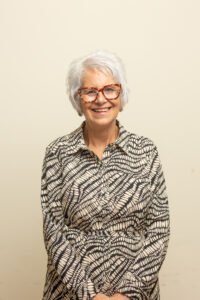
Simon [00:00:00]: My name is Simon Perry, and today is the 18th of August, 2026, and I am here today with Sheree Ash, and we are recording for the Flame Keepers Oral History Project. Sheree, hello. Welcome. Thanks very much for agreeing to do this today.
Sheree [00:00:24]: It’s fine.
Simon [00:00:24]: Can you tell me what were the well? First of all, when were you born?
Sheree [00:00:32]: When was I born? 1957.
Simon [00:00:35]: And what were the name of your mum and dad?
Sheree [00:00:38]: They were Jevons. It was Vera and Kenneth Jevons.
Simon [00:00:42]: Okay, and what did what did they do?
Sheree [00:00:46]: Mum worked in a hotel, like doing bedrooms, cleaning stuff. Dad, he’s always worked like on the cruise liners. When Mum and Dad were met, when they met each other, he was in the Queen’s Guards. He used to ride the horses.
Simon [00:01:02]: Right, goodness, that’s quite varied, isn’t it?
Sheree [00:01:05]: Yes, right. He’s been on the cruise liners. He’s been a driving instructor and coach driver.
Simon [00:01:15]: Goodness gracious! Right.
Sheree [00:01:17]: He’s done quite a lot in his life, he did.
Simon [00:01:19]: Okay, and did he have brothers and sisters?
Sheree [00:01:23]: Yes, yeah, he did, but I never really knew him.
Simon [00:01:26]: I mean did you have brothers and sisters?
Sheree [00:01:28]: I’ve got brothers and sisters. Okay, sorry, yes.
Simon [00:01:31]: And how many do you have?
Sheree [00:01:34]: I have an eldest brother who’s just passed. He passed away a couple of years ago. His name’s Jim. Then I’ve got a brother, no, a sister next. It was actually Wendy. Yeah, she’s she’s just over 80. Okay. Then I’ve got a brother who is 80.
Simon [00:01:56]: Okay.
Sheree [00:01:57]: And then I got a sister who’s 76.
Simon [00:02:00]: Goodness.
Sheree [00:02:01]: And then there’s me.
Simon [00:02:02]: That’s quite a set, yeah. How was growing up in a in a household with, I guess that’s five kids, is it?
Sheree [00:02:09]: Yeah, but I come nine years after my last my sister, so really that they just said I was a pain in the bum, to be honest, because I always wanted to go out with them with their boyfriends. They still remind me about that one. Yeah. So, but yeah, mum and dad were good.
Simon [00:02:09]: Okay and where where was it you were grew up on the island?
Sheree [00:02:32]: Well, we were a bit of the serial movers. Lived in Sandown. Lived in Lake. Lived in Ryde. So we moved about a bit, but yeah, so it was all local.
Simon [00:02:45]: And most of the time, so did that move you moved around schools as well?
Sheree [00:02:50]: Yeah, I did actually. School’s not a very good memory for me. I hated school. I really did from day one. I went to Caversham House in Ryde when I was little, then I went to Grove Road in Middle, and then Sandown High School. They had two separate bits because there was quite a lot of children going to Sandown High School, so they had like a separate bit which you went to for two years. It’s in Shanklin actually in Victoria Avenue, and it was a big old house. It’s fantastic as that was, but I didn’t like school itself, doing the school bit, but yeah. So, but I left the second I could walk out. I did.
Simon [00:03:31]: What was it that didn’t gel for school with you?
Sheree [00:03:35]: Well, my eyesight’s quite poor, so in them days you didn’t have any help. If you can’t see, copy somebody or sit in the back and do nothing, and that is how it was. So I never really learnt very much, to be honest, at school. I can read and write, sort of, I can, but I’m a bit dyslexic as well. So because of it, I’ve got along all right. So I’ve managed in life, you know, no problems as such. But I just hated school.
Simon [00:04:06]: So the the eye was it was just your eyesight. You couldn’t focus on things, or what was it about the eyesight? Yeah.
Sheree [00:04:13]: Well, I’ve got nystagmus, they call it, where the eyes move. So, and the eyesight, you can you can’t really improve it. You can help it a bit with glasses, which, but it’s not something like they could give you stronger glasses and you’d be able to see better. It don’t make no difference on that. So yeah, so that’s how it is. So yeah, it wasn’t very best at school. I was all right when I was a little school, like everybody is, you know. But once we start hitting middle and high school. I absolutely hated it, you know. So I used to end up sitting chatting and got. I remember once I got a blackboard rubber thrown at me by a teacher, Mrs Boniface. I remember that. We were just chatting because I didn’t get on with any work. I was just told to go and sit at the back or ask somebody to copy. That’s all it was in them days. I mean, not like now.
Simon [00:05:04]: It’s. I mean, it’s understandable if you’ve got nothing to stimulate you in the classroom. If you can’t see what it is, why would you be any different?
Sheree [00:05:12]: Yeah, uninterested.
Simon [00:05:15]: So that was sorry to focus on the eye thing so much, but I’m just interested in this idea of that, and then what you were doing at Ronson’s later was, you know, you had to see with what was going on.
Sheree [00:05:26]: Yeah, because I’m not blind, but you can be blind with it, or very partially sighted. But my eyesight is good enough to do most work.
Simon [00:05:34]: Okay.
Sheree [00:05:35]: So I was lucky on that score. But when I left school, I went into doing nannying, and that’s what I wanted to do, to be a nanny. So I worked on Fairway Caravan Park in Sandown. First of all, I worked there for a little while, looking after children. Then another job come up in Bembridge, looking after two children, and it was a little bit more pay, like literally a bit more pay. So I went there. Then one day, of course, we used to go out drinking, you know, night clubbing and all that. And one of my friends asked me, “Why don’t you go to Ronson’s? She said, “There’s good wage there. I said, “Yeah, all right.” So that’s where I ended up.
Simon [00:06:16]: Right. Okay.
Sheree [00:06:17]: Because I didn’t really know about it.
Simon [00:06:19]: So she was working there, was she?
Sheree [00:06:21]: Yeah.
Simon [00:06:21]: Right. Yeah. Because we had heard the pay was good there. They looked after people.
Sheree [00:06:26]: Yes. Yeah, it was all of 20 pound.
Simon [00:06:30]: Right. That was a week, was it? Right. Okay. And then so she suggests it on a night out, and then what you got in touch with them, and they said, “Come in.”
Sheree [00:06:42]: Yeah, from what I can remember, I just phoned up, got an interview. Literally, was in an office, small office in the front, and that was it. I mean, five minutes. There was no ‘have you’ve got any qualifications’ or anything, because you didn’t really need them to be honest. Not doing that.
Simon [00:06:58]: So you’ve passed the interview, flying colours. And then they said, “What start Monday or tomorrow?
Sheree [00:07:05]: I’m assuming it would be a Monday. I can’t remember that far back. I mean, I was only 17.
Simon [00:07:12]: Okay, and what? So then, I mean, it’s a new place, quite large.
Sheree [00:07:19]: Yes.
Simon [00:07:19]: What did it feel like walking in there?
Sheree [00:07:22]: Big and scary, because there were some people I knew, so that wasn’t so bad. But it was big and scary, and they worked a lot of the ones. Well, I say a lot, a couple that I knew, worked on the lines, and I couldn’t get on with doing that. It was too fast for me, so they put me in the ancillary department, which was cushy. So that’s where I stayed really, and we used to just meet up at break times, lunch times, Christmas times when we didn’t do much.
Simon [00:07:49]: Yeah, no, I have heard the Christmas were quite quite adventure.
Sheree [00:07:53]: Yeah, it was. Surprising, health and safety not anymore. Not then.
Simon [00:07:58]: Yeah. So the when the lines were for the making of the Ronson lighters.
Sheree [00:08:06]: Yeah, putting the bits in this and that. You know, yeah, I didn’t have much to do with that, so I don’t really know a lot. But I remember seeing the lines, you know, them coming down the lines and people taking off, doing something and putting it back on. Yeah.
Simon [00:08:20]: People have told us there was a sort of a training line.
Sheree [00:08:23]: Maybe. No I don’t remember that.
Simon [00:08:25]: Okay. Where they sort of taught you how to do stuff. Yeah. So then the ancillary department. What was that all about then?
Sheree [00:08:33]: Well, that was another just a department that had machine works there that did different things. I don’t know what all of them did because you stick to your own bits, you know. I worked in a couple of parts of it. One I called the blow-off room, as they nicknamed it. But next door was the room where they sandblasted the plastic, which first of all it looks real shiny and cheap-looking bits of plastic, but shaped a bit like a lighter.
Simon [00:09:03]: This was the sort of the case of it.
Sheree [00:09:05]: The case, yeah, and then it would go through the blaster, which would make it nice and smooth and looks nice, ready. Then it came to us, literally next room, because it was like a glass partition with the door. So then it come into here where we had these long metal, I don’t know what you’d call it, really cylinders sort of thing-with a pedal and a hole in the middle, and you had the trays this side that you had to do, and the trays that side that you’d blown the sand out of.
Simon [00:09:30]: Okay, so on the left you pull from the.
Sheree [00:09:40]: You took one out of that tray. Put it into that into the hole. Where there’s a pipe which blew the sand right out of the lighter, so it’s completely clean, and then put it into the tray.
Simon [00:09:52]: And the sand was on there because that’s what they were using to smooth down the case. Yes.
Sheree [00:09:56]: It wasn’t much sand. It was more the sand inside. There was nothing. Really, on the outside, it was the inside. It was just to make sure there was blasted. It was all took out to go to the next part, which I didn’t do.
Simon [00:10:08]: So was it constantly blowing through the air, or you pressed a pedal?
Sheree [00:10:12]: A pedal. It is really amateur. When I think about it now, what you see now on the telly, it was literally a metal box with a hole.
Simon [00:10:22]: Yeah. Well, I guess they needed a way to catch the sand.
Sheree [00:10:25]: Yes.
Simon [00:10:26]: So you didn’t end up with a beach inside there. But when they were blasting the cases, was that quite noisy?
Sheree [00:10:36]: Yes, it was noisy in there. Yeah, because we had a door and it was usually shut. When I opened it, it was noisier. Yes, yeah, right. From what I remember.
Simon [00:10:46]: And was that? I mean, was that sort of divided to men worked in the sandblasting bit?
Sheree [00:10:51]: Yes, and the women worked in the other bit. There was two or three of us in there, and one girl that checked them all for scratches because they were easily scratched, we had to wear like white gloves.
Simon [00:11:04]: Did you?
Sheree [00:11:04]: Yeah, and of course, you know, if any scratches, they’d have to go back through. So she’d sort of separate the ones that weren’t good.
Simon [00:11:13]: And that would be from handling or dropping.
Sheree [00:11:15]: Yes.
Simon [00:11:16]: Right. Okay. And they would go back for sandblasting to come back again. That’s another thing that people have said is basically nothing was wasted.
Sheree [00:11:25]: No, from what I remember.
Simon [00:11:26]: It was either ‘well that’s faulty, we’ll find out what the fault is and fix it’, which I guess these days would be seen as being sort of ecological. Yes, either that or it was sort of for them it was about the money.
Sheree [00:11:40]: Yes, I think so.
Simon [00:11:42]: Yeah. Okay. So, how many other people were sitting doing the air blasting?
Sheree [00:11:50]: I’m sure there was three of us, from what I remember. Two or three. I think it depended. There was another girl, Shirley. She used to do it with me, and there was another girl called Sue who was doing the checking, but I can’t remember now. But I think there were only two, as far as I can remember. But it’s only a real small room. I mean, not even as big as this room. You know, it’s only small.
Simon [00:11:50]: Right. What are we like? Eight foot.
Sheree [00:11:50]: Yeah. Yeah. A bit smaller than this, I’d say.
Simon [00:12:16]: Okay. And I can imagine you press the pedal. There’s the ‘psssst’. How do you have conversations with all that going on?
Sheree [00:12:25]: Oh, we just did. Just talk loud. We just have a laugh and a chat. You know, you just carry on doing it. It got automatic in the end. You didn’t even realise what you’re doing. You know, I’ve been doing it for years. Yeah, a couple of years.
Simon [00:12:37]: Right. And so that’s interesting. The social bond between the people in each department was itself quite strong.
Sheree [00:12:47]: Yes.
Simon [00:12:48]: Was it just that everyone was you know some places you go it’s always like that. Some places there’s you know someone doesn’t quite rub up the right people.
Sheree [00:12:57]: Yeah. Funnily enough, I don’t ever remember anyone being horrible. You know, like I mean, since then, of course, and I’ve worked in homes, because I was a carer ’til I retired. Working in homes, oh, there’s nasty people, but you know, you know, bitchy and all the rest of it. So, yeah, but in Ronson’s, I don’t ever remember anything like that. We were all just got with our job and having a laugh. Really, don’t remember anything nasty. I never saw any nastiness anyway. So, you know.
Simon [00:13:25]: That’s great. So that all the people in that bit there were all sort of similar age to you.
Sheree [00:13:33]: No, no, they were more older than me. Yeah, because I was 17.
Simon [00:13:37]: But what were they? I mean, anyone when you’re 17, anyone over 20 seems impossibly old, don’t they?
Sheree [00:13:44]: No, I mean there was some sort of older than me, like 20s-30s, but then there were some older ones as well. Terry was older. He was blind. He worked in the other little bit because as you come out the door, that’s when you got the lighters go from there, and you have this like. It’s really quite hard to explain the bit that you push in on the side in the lighter. It’s plastic still,
Simon [00:14:06]: like the striker. I don’t know. Yeah, yeah, I suppose so.
Sheree [00:14:09]: Yeah, at the side, and they would have these things at the side, and you had to put this thing. So it’s hard to explain. Yeah, you’ve got like a little machine with a handle, and you used to have to put the thing into there, put a pin in the top, and then pull down a handle, and that put the pin into it, ready to go to the next area.
Simon [00:14:31]: So that was a bit the sort of like the pivot for the
Sheree [00:14:34]: Yeah, yeah. But that’s what I did in that bit. But the others worked on machines, but I never really knew what they did. I never really asked, to be honest.
Simon [00:14:43]: Yeah, so focused on your own.
Sheree [00:14:45]: Yeah, yeah, just got on my own. Worked with Terry quite a bit. Yeah.
Simon [00:14:49]: And can you tell me about Terry?
Sheree [00:14:51]: He was blind, and his wife worked there, and she was blind, and she worked on one of the machines, but I didn’t really have much to do with. Yeah, a lovely couple they were. Yeah.
Simon [00:15:03]: And what sort of age were they?
Sheree [00:15:06]: I suspect might have been in their 40s.
Simon [00:15:08]: Okay.
Sheree [00:15:09]: Could have been yeah.
Simon [00:15:10]: Yeah. And he was doing something that didn’t need him to be able to see I guess. No, he
Sheree [00:15:14]: No, he was doing the same things that I was doing with that, and he didn’t need to see. He didn’t have to look.
Simon [00:15:19]: Oh, it guided itself in when he did the pin. Okay.
Sheree [00:15:22]: So he did that all the time. I didn’t. It was sort of I went from different bits, you know.
Simon [00:15:27]: Yeah.
Sheree [00:15:28]: Working.
Simon [00:15:29]: Oh, so he was he was in charge of pins.
Sheree [00:15:31]: Well, I wouldn’t say he’s in charge, but he was there. But he is a funny bloke. He was. Yeah. It was a bit. I wouldn’t say rude, not like, but saucy. Oh right! Yeah, with all the girls. Oh yeah, he liked all the girls. Yeah, and his wife was there. Yeah, she took no notice. What I can remember, he was a bit one for the women, like chatty, you know. Yeah, but he was lovely. No, he was a lovely lad, lovely man.
Simon [00:16:00]: And what did his wife do then?
Sheree [00:16:02]: I don’t know, she worked on another machine. But I don’t know what one it was. So it was further over because in that bit it’s bigger, a lot bigger area. So we were here, and she was all over there. Yeah. And I’m not sure what they actually did on their machines. And we, you know, we just really didn’t take no notice of other people’s work. And then there was another lady there who was deaf and dumb. I think there was two, but I only really knew one of them.
Simon [00:16:26]: Yeah.
Sheree [00:16:26]: Yeah, little lady, but I can’t remember her name.
Simon [00:16:29]: What do you think? I mean, that’s fairly unusual to have such. What’s it? So broad employment. What what brought that about? Do you think?
Sheree [00:16:37]: No idea. I have no idea. I mean, they were there when I started, and I suppose you just didn’t really think about it.
Simon [00:16:43]: It’s before the time of sort of equal opportunities and that sort of stuff, isn’t it?
Sheree [00:16:47]: Yeah, yeah. It was great. No, they were fine.
Simon [00:16:51]: And with the the woman that was deaf and dumb, it’s quite hard to socialise.
Sheree [00:16:57]: Yes. Yeah, she always used to just smile. I think she understood talk, could understand some I think. But she used to just nod and smile a lot.
Simon [00:17:07]: Right. Right.
Sheree [00:17:07]: But she was lovely.
Simon [00:17:09]: I’m just thinking back. There was a really noisy sandblasting room. Then there’s your. Is that the blow-off room?
Sheree [00:17:10]: Yes. That’s what we called it.
Simon [00:17:10]: With a foot pedal, and then so how long were you there before you moved to?
Sheree [00:17:12]: Oh well, we didn’t, we sort of moved around a little bit. You know, sometimes they’d say, “Oh, can you go on so and so?” You know, you didn’t get any training. They’d show you what to do. No, no, they just sort of show you, and like one or two, like oh, you put the pin in there and pull the handle, put it in there, and that’s it. You know, there’s no training, not in that lot. There wasn’t. And then the other part I worked in, you come back out of the doors, and there was another part, sort of like a quiet part. It was near hardly any noise, and that’s where we used to fill up the little plastic tubes with crystals that go in the cigarette holder.
Simon [00:18:02]: Oh, right, you’re right.
Sheree [00:18:03]: Because they used to have cigarette holders years ago, didn’t they?
Simon [00:18:07]: So that was filtering out the whatever’s in the cigarette to come out. Okay.
Sheree [00:18:13]: There were little plastic tubes about an inch long.
Simon [00:18:16]: I think I’ve seen photos there. I can’t remember the name of the product.
Sheree [00:18:20]: No, I can’t remember.
Simon [00:18:21]: There was somebody who mentioned, just because I’m thinking about the novelty of the name about a can opener that Ronson did, which was called the Can Do.
Sheree [00:18:30]: Oh right, no, I don’t know about that.
Simon [00:18:32]: Electric can opener. Ah right. So yeah, but okay. So they gave you the clear plastic tubes.
Sheree [00:18:41]: Yes.
Simon [00:18:41]: And then, how did you fill the crystals up?
Sheree [00:18:44]: With a little spatula.
Simon [00:18:45]: Oh right, okay.
Sheree [00:18:47]: Fill it up. Yeah, and then put a lid thing on like a little black rounded lid, and it had little tiny wincy holes in it.
Simon [00:18:53]: Right.
Sheree [00:18:55]: I done that. Yeah. The little job.
Simon [00:18:58]: How big is that department then? I guess.
Sheree [00:19:00]: I don’t remember it being very big to be honest. I don’t remember much about it, not really. So I don’t think I was there a lot. It was only like they just asked me to do it now and again, but that was the only three things I did while I was there. But I wasn’t there that long, really.
Simon [00:19:15]: I guess you, when you’re in the ancillary department, you get to see different parts that people wouldn’t see. Some people stick on one line for ages.
Sheree [00:19:24]: Yes. Yeah. That’s the only bits that I did, and I didn’t really take notice of anything else unless I was asked to do it, but which I wasn’t. So I just stuck with what I did, you know.
Simon [00:19:35]: And that was so the when you sat down with a fresh set of people, what was that like?
Sheree [00:19:40]: Ah, well, you didn’t really.not many. As I say, there might be some more, with me, when I was doing the little crystals, and you just chatted about everyday things. But I don’t remember nobody’s names on that. Not at all because I didn’t do it much. It was and again, but I did more so with the thing because that was the one where I put the pin right through my finger.
Simon [00:20:02]: Oh yeah. Okay. So that was instead of you putting the lighter underneath, you thought you put your finger in.
Sheree [00:20:09]: Put my finger in. Why? I was looking. I was looking at talking to Terry.
Simon [00:20:13]: Okay. So what’s that? Your pointing finger on my left hand. Okay.
Sheree [00:20:18]: It went right because I used to bite my nails, but it went lucky enough. It went right down the side of the nail, but it went right through and out the other side.
Simon [00:20:28]: Wow! Yeah, and that’s that’s you pulling the handle.
Sheree [00:20:31]: Yeah, me yanking it.
Simon [00:20:33]: ulling the thing into your own hands. And you were like, oh wow.
Sheree [00:20:39]: Yeah, I went, ‘Terry I’ll be back in a minute.’ That’s what I said. He thought I’d gone off to the toilet, I think. So I’ll be back in a minute, and because in them days they had like a nurse lady there that used to do you know if you got cut and things like that, and it was in a little cabin bit out the front, and I went there and was like.
Simon [00:20:39]: Excuse me Miss.
Sheree [00:20:40]: Yeah, it was only when she pulled it out I felt faint. Because they’re only very fine needles. They weren’t thick, thick.
Simon [00:21:08]: Okay.
Sheree [00:21:09]: Thicker than a normal sewing needle, but like a thickish. You know, it’s sort of hard to explain. It was thicker than a needle that you’d sew with, but not thick, thick. So it went down in through. So she pulled it out, plastered it.
Simon [00:21:24]: What did she use, a set of pliers, or…?
Sheree [00:21:27]: I can’t remember, something she had, pulled it out. I felt sick once she pulled it out, but I was all right. I felt a bit faint, if I remember correctly. Then she sort of wrapped it up, and then I went back to work. Terry said to me, “Where have you been? You’ve been gone for a long time. And I told him then. He said, “You should have told me.” I said, “No, I just needed to go. I didn’t want to explain it all to him, you know. Right. You’re in shock, I guess. Yeah, it was a big shock. Yeah. Yeah. Yeah, because I’d done it to myself.so that
Simon [00:21:59]: So that was from the top of the nail to the bottom, ie. straight through
Sheree [00:22:02]: Straight through, and out the other side.
Simon [00:22:04]: Okay. And had he done the same thing?
Sheree [00:22:09]: No, not as far as I know. No, he was more careful I expect.
Simon [00:22:13]: Right. And this is Terry, the one who was blind. Yeah. Never done that. Right. Okay. I guess maybe you become sort of more tuned to it.
Sheree [00:22:24]: Yes, more than likely. Yeah. I suppose he could feel where he had to put the thing. Me, I just was looking at him, talking.
Simon [00:22:39]: People have talked about tea breaks that were had on the line.
Sheree [00:22:41]: Yeah, yeah, we had tea breaks. It’s difficult to remember many of the tea breaks. I remember lunch times more so in the canteen. Tea break wasn’t like long, 10-15 minutes, I think, to get a drink, but the lunch time was longer.
Simon [00:22:56]: And during the tea breaks, then everyone got together, or you stayed?
Sheree [00:23:00]: Yeah, you stayed in your own bit, really. Yeah, just get a drink and go back and just sit and chat. You know. Yeah. Don’t remember sort of sitting in big things at all. Only at when at lunchtime we’d have sit at tables. But yeah.
Simon [00:23:16]: And tell me about lunch. What was that like?
Sheree [00:23:18]: Oh, it’s good. Food was good in the canteen, yeah. Because it’s funny actually, because at break time you could have rolls and stuff like that if you wanted, and sometimes I can always remember always had the same because I don’t like butter, and they used to do me a cheese crusty roll, so I had that for my lunch. They always used to do it because they knew me as I don’t eat butter, so they did it separate. And at lunchtime, I always had chips and gravy.
Simon [00:23:48]: That sounds like the meal of a king.
Sheree [00:23:50]: Yeah, it was, it was lovely.
Simon [00:23:52]: Okay. So what a big pile of them?
Sheree [00:23:55]: Yeah, quite a plateful. Yeah. That’s why I put on too much weight. I think then when I was there, eating all the wrong things.
Simon [00:24:05]: And did you get to be known for ‘Oh, hello, it’s old chips and gravy.
Sheree [00:24:10]: No, no, nothing like that. Everybody just got their own stuff. Yeah.
Simon [00:24:16]: So you then sort of cross mixed with other lines.
Sheree [00:24:19]: Yeah, you did. Yeah, you sort of met other people. I remember a lady called Olive, and I thought she was quite old-fashioned. She looked old-fashioned to me. I thought I was only a young girl, you know, a bit modern. And there’s her. Now she looked really old-fashioned. But the other thing we did do when I met her, and there were some others, but I can’t remember their names. We started going horse riding. That was one of our things to do out of work. We went horse riding.
Simon [00:24:48]: Where?
Sheree [00:24:51]: Chandler’s, I think. I think it was either Chandler’s in Sandown, which is gone. Then there was another place. Further afield, but I can’t remember the name of it. We went there as well because I used to ride a horse called Jeronimo.
Simon [00:25:08]: That’s a great name.
Sheree [00:25:08]: Yeah, Jeronimo.
Simon [00:25:11]: So that idea of socialising outside work.
Sheree [00:25:14]: Yeah, we did do some. The others, a lot of them used to go off drinking, like you know, used to meet each other and go out pubbing. But I had my own set of friends that I used to go night clubbing with, so I didn’t really mix with them.
Simon [00:25:25]: Outside work?
Sheree [00:25:26]: Only the girl I knew, Lesley, she used to come out with us drinking. Yeah, but she worked on the line, but I never really saw her much at work. Yeah, and I had a friend, Corrine, that worked there. She was the one who got sacked.
Simon [00:25:41]: For?
Sheree [00:25:42]: Hitting a girl.
Simon [00:25:43]: Oh my God! I thought everyone got on there.
Sheree [00:25:46]: They did, but Corrine, bless her heart, because now she’s got dementia. She’s my age, and she’s in a home. She’s got dementia, but she was fiery. Was she fiery? I knew her since I was five at school, and she was horrible to me at the start, but then we got friendly in the end, and that was it. We went through school together. There was a group of us stuck together through school, even though I hated school. But we had friends, a few friends. Yeah, but she, you know, she was fiery. She worked there for a little while because I told her about it, and she came there. But yeah, again, she got on with everybody ’til somebody said to her, “Your boyfriend looks a nice chap’. So she hit her. Yeah, she was very. It was in the toilets. I was in there with her. Yeah, she was very like worrying that like somebody would take him away. She was very like that, you know. She only said it as a like a passing comment, you know, which is nice comment, but not not to Corrine. It wasn’t. So she got a sack.
Simon [00:26:52]: Yeah. Okay. Yeah, I guess you got to not really. You got to stop that.
Sheree [00:26:58]: Yes. Yeah. Yes. Sack instant dismissal.
Simon [00:27:03]: And that was a super rare occurrence.
Sheree [00:27:06]: Oh yeah, I never heard of anything else.
Simon [00:27:08]: So that must have been the sort of the talk of the factory?
Sheree [00:27:10]: I bet it was. Yeah, but she didn’t ever hurt as far as I remember. She only clobbered it once, you know.
Simon [00:27:22]: I like that idea of you sitting down at lunch and then some sort of discovering you all like horses.
Sheree [00:27:29]: Yeah, because I always used to go horse riding when I was younger. I used to go riding every weekend, and I used to spend most of Sunday there grooming and doing all that. And we got chatting, and a few of us decided to start going horse riding together. So, but the only reason I remember Olive was she fell off. But bless her heart, yeah, she got caught in a branch, and the branch caught her, and she came off backwards.
Simon [00:27:55]: Wow.
Sheree [00:27:56]: Yeah, but I do remember that was funny. Yeah, she was all right. She didn’t hurt herself. Yeah. But yeah, we remember that, Olive.
Simon [00:28:07]: And what about when when you were going out? You’re saying you went clubbing outside of the friends at Ronson. Where were the clubs you’re going to?
Sheree [00:28:17]: I went to a few. I used to go to the Prince Consort, which is in was in Ryde. Now that’s gone, of course, and it was Patsy’s, I think. Then I don’t know what’s there now, if anything at all. I don’t know. It’s called Patsies in Ryde as well. Yeah, down by the seafront. Yeah. Do you know Ryde? Yeah. Seafront. Yeah. If you come down Union Street and then walk that way, you’ve got a big open area of grass there, and then you’ve got some big buildings. And it was one of the buildings. You just go downstairs to it. It’s underground.
Simon [00:28:56]: Okay.
Sheree [00:28:56]: That’s the Prince Consort. That’s where I spent most of my time, most I think used to go there. That was every Saturday. The odd occasion we’d go somewhere else, like the boat. I went there once, but I didn’t like it. There was the Birdcage, that was in Sandown.
Simon [00:28:59]: I don’t know. I haven’t heard of that one.
Sheree [00:29:16]: Oh, haven’t you? Yeah, the Birdcage. There was a swimming pool next to it, one time that went and yeah, there was the Birdcage and that went to something else. Can’t remember. And there’s the East Cliff that was in Shanklin. We used to go there as well. So Thursday, Friday, Saturday, and Sunday we used to go out drinking.
Simon [00:29:36]: Did you? Oh, clubbing on all of those. Oh, that was pubs and clubs.
Sheree [00:29:41]: Clubbing, dancing to two in the morning.
Simon [00:29:44]: Wow, wow! Still getting to work?
Sheree [00:29:46]: Apart from Sunday, of course, it finished at 12. Then I used to go to work. Yeah, I mean, it wasn’t brain surgery, was it? My job. I could still it with a hangover.
Simon [00:29:58]: And what was the attraction of the nightclub then?
Sheree [00:30:02]: Dancing, drinking. I didn’t drink like loads, but I used to like a drink them days. I don’t know, but it’s the dancing. We used to dance all night long, you know, get there for like half nine and leave at two in the morning. But it was cheap weren’t it, them days.
Simon [00:30:20]: That’s a lot of dancing.
Sheree [00:30:21]: Prince Consort was, I can still remember, it would have been two and six to get in, so that’s about …
Simon [00:30:30]: Two shillings and sixpence, right?
Sheree [00:30:32]: To get in, and the drinks were really cheap. I used to drink Pernod.
Simon [00:30:38]: What with water?
Sheree [00:30:39]: No lemonade. Yeah, did that, and they were-I mean-they were cheap, and then we get a taxi home to Lake, two pound. I could go on a night out for a fiver.
Simon [00:30:54]: Yeah! Wow. Okay.
Sheree [00:30:55]: Five pound.
Simon [00:30:56]: Yeah. So I mean, as a percentage of a 20 quid for a week’s work-that’s a fair bit.
Sheree [00:31:03]: Had to give Mum some.
Simon [00:31:04]: What else are you going to spend it on apart from going to the house?
Sheree [00:31:06]: Give Mum some, and then buy clothes. We used to always go out Saturday because then I lived either Sandown or Lake area, and I used to go to Newport because that was the same main town, and used to go shopping for something new to wear Saturday night.
Simon [00:31:25]: So each week there was an outfit selected.
Sheree [00:31:27]: Yeah, we used to do that every week.
Simon [00:31:30]: What was the music style then?
Sheree [00:31:33]: Do you know it’s awful I can’t remember really. It was all like the nice stuff that you could actually hear the words too. Because sometimes I don’t remember much of the dancing, like the fast dancing music, but the slowies come on like about 15 minutes to the end.
Simon [00:31:49]: Oh yeah.
Sheree [00:31:50]: And I can’t really remember the names of them, but as soon as I knew them, I’d hear it and I’d say, “Oh, do you remember dancing to that?” You know, sort of thing. Yeah, because my husband, when I’m with now. He was there at the same time.
Simon [00:32:04]: Okay. Yeah. Was it sort of boys on one side, girls on the other?
Sheree [00:32:08]: It was a bit. Yeah. I mean, it was a group of us, and we used to sort of stick together as well. The group of girls, group of boys, and could have a dance at the end.
Simon [00:32:16]: Yeah. That’s mad, the cab at two quid home as well. You can’t imagine that anymore.
Sheree [00:32:25]: And on the Sunday, because it was East Cliff, and where I lived in sort of Lake Sandown area, I used to walk home over the cliffs, never even give it a thought about, worry about anything, you know. Middle of the night on my own.
Simon [00:32:38]: Yeah. I guess that was before the times where we had a lot of news and people started to hear of anything.
Sheree [00:32:48]: You didn’t hear anything, because then Birdcage was Sandown, so I could walk home from there. It was only the one in Ryde that I actually had to get taxi for.
Simon [00:33:01]: Yeah but you said someone from Ronson’s came along to the clubbing stuff.
Sheree [00:33:07]: Yeah, Lesley Whit. I don’t know whatever happened to her in the end. I know when I left, that was it because I moved to the mainland when I left because I got married, and yeah, the first time moved to the mainland, yeah.
Simon [00:33:22]: So that’s what made that’s what led you leaving Ronson.
Sheree [00:33:24]: I wouldn’t have left otherwise. That was the only reason.
Simon [00:33:27]: Okay.
Sheree [00:33:28]: And when I left, they did. I can still remember. I had a card with everybody signed it, but I don’t know that went that went missing over the years, which was a shame, but I remember them filling up my coat sleeves with all the cuttings of the. Went to put my arm in; it was full.
Simon [00:33:50]: Full of what?
Sheree [00:33:51]: Plastic cuttings off the actual lighters, the bottom bit. Because I suppose at one stage in one area they must have had like the piece cut off the bottom, so it’s sort of an ovally shaped plastic piece. And my arm, both my arms were full. They tied at the bottom. My arm lifted it up. That was the joke I got. Right. And we, as I say, the other thing was which we really enjoyed. It was that we had a coach used to take us there and take us home. Yeah, we used to pick it up at Lake. I did, and there was another lady that worked at Ronson’s there, and I never really spoke to her because she was older. But all I can remember, she had her nails were like mine now, but each one was a different colour, and I can still remember that because I had bitten nails, and they always look beautiful, and I used to look at them, you know. But yeah, we used to get a coach. Lesley got on at Sandown, and then I got on at Lake, and there was a few of us at the back. Corrine was on there as well at the time, you know, and we used to sing at the back of the coach. 10 Green Bottles was one of them.
Simon [00:34:59]: I mean that’s. What a jolly way to go to work!
Sheree [00:35:01]: Yeah, yeah, I enjoy it. None of us moaned about going to work. That’s lovely.
Simon [00:35:07]: And that was laid on the coach from Ronson’s.
Sheree [00:35:09]: From Ronson’s, yeah.
Simon [00:35:11]: And you made a small contribution, or it’s free, or … ?
Sheree [00:35:14]: I think it was free, as far as I remember. I can’t remember. I remember when you go in, you had to clock in and out. Had to do that.
Simon [00:35:23]: Well, that’s the thing that I guess people can’t imagine these days. Clocking in. That was a physical bit of cardboard you stuck in the machine, and it stamped the timer. Yeah.
Sheree [00:35:33]: Yeah.
Simon [00:35:34]: So it had a clock on the front.
Sheree [00:35:36]: Yes.
Simon [00:35:36]: So everyone had their own slot on the backboard where the card was, okay.
Sheree [00:35:42]: Yeah.
Simon [00:35:44]: Just put it back in, and then the end of day …
Sheree [00:35:46]: Clocked out. I suppose that’s how they knew that you’d worked all day and for your wages, isn’t it? Yes, but come in a packet, little brown packet.
Simon [00:35:56]: Oh right. Now how did that work then? When did you get paid?
Sheree [00:36:01]: I can’t remember. I think it was every Friday, from what I can gather, because that’s how I had the money for the weekend. Yeah, just a little wage slip and a little brown envelope that just stuck down the square one. And when
Simon [00:36:15]: you got the first one of those, what did that feel like?
Sheree [00:36:18]: I felt rich because I’d never earned that much. Because in looking after the children, I got seven pound a week looking after the two children on the caravan site, and then when I went to the posh home that they lived in Bemnbridge, lovely home, I got 11 pound there.
Simon [00:36:39]: You got 11 pound there. Yeah. Right. Okay.
Sheree [00:36:41]: Which I thought was good compared to seven, and then went to Ronson and got 20, then I could afford to go out.
Simon [00:36:49]: Oh, that’s interesting. So I mean, I guess when you’re doing the nannying as well, you’re covering for them when they’re you don’t get them a chance to socialise that much. I guess when you’re nannying,
Sheree [00:37:01]: Not really. I was there all day. I used to see friends in the evening because we we didn’t strip off, but we used to call it skinny dipping. We used to go, and then when we worked at Ronson’s, that was something else we did. We used to go swimming down in Sandown seafront in the evenings.
Simon [00:37:05]: What once you jumped off a coach from work?
Sheree [00:37:17]: Yeah, go home because we’d finish. I think we finished at half four.
Simon [00:37:21]: Okay.
Sheree [00:37:22]: Short half four, by the time we got home, because I lived near the beach anyway. Let’s go to skinny dipping.
Simon [00:37:28]: Oh, that’s a nice way to end a day.
Sheree [00:37:29]: We used to call it skinny dipping, but we didn’t like get skinny.
Simon [00:37:32]: Right. Did you carry on that? I guess when you moved to the mainland, there wasn’t much.
Sheree [00:37:35]: That was it. She lost it all. Yeah, friends and everything. It was horrible.
Simon [00:37:43]: Where did you move to there then?
Sheree [00:37:45]: Surrey.
Simon [00:37:46]: Okay. Is that someone you’d met in one of the nightclubs?
Sheree [00:37:51]: No, I met my first husband along Sandown Seafront, an amusement arcade. He was over on a day trip with his mate.
Simon [00:38:02]: Oh wow!
Sheree [00:38:03]: And I was with my friend, not that weren’t there. Boo, her name was well, nickname was Boo. Her real name was Julie, but they used to call her Boo because she was a big girl, so used to call her Boo Boo the Bear. But she didn’t mind, and we used to just call her Boo, and that was it. Yeah, and we were there, got chatting to these two lads, and I end up going over to the mainland every sort of weekend, and then I end up moving over.
Simon [00:38:29]: Right, and that so rather than going out clubbing, it was up to Surrey.
Sheree [00:38:34]: Yeah.
Simon [00:38:35]: Right. Okay.
Sheree [00:38:36]: Worst thing I ever did. It’s horrible.
Simon [00:38:40]: Okay, okay. Well, let’s leave that there then. So let’s get back to 10 green bottles on the coach.
Sheree [00:38:47]: Oh yeah, that’s much nicer. Yeah, done other songs, but that’s the only one I can really remember. I expect there was other songs we used to sing, or to sing. Somebody would have, like a Walkman or something, and we’d sing with that. Yeah, drivers tell us to shut up because we’ve got a bit loud sometimes, but it was fine, you know, because he’s just done it every time, you know, every day he was taking us.
Simon [00:39:08]: Right.
Sheree [00:39:08]: Well, sometimes it was a different driver, but nine times out of 10, it was the same one. Yeah. Anyway he was alright. Drop us all off and then pick us up.
Simon [00:39:16]: Somebody was saying about there was a sort of this. I can’t remember where their coach was come from then, because they were saying there were people that got off for the Dixons, the card place. ,
Sheree [00:39:32]: Oh yes, yeah.
Simon [00:39:33]: All on the same coach. Yes. Did you have that as well?
Sheree [00:39:37]: I think we could have done because I didn’t know everybody on the coach. We could have done, yeah, because it was the same area, wasn’t it?
Simon [00:39:44]: Okay, yeah, next door.
Sheree [00:39:45]: eah.
Simon [00:39:46]: And it seemed, well, from what the way she told it, her perspective was, yeah, there was a sort of, oh, you know, they’re Dixon’s girls. We didn’t talk to them.
Sheree [00:39:55]: They were Dixon’s girls. Oh yeah, I don’t remember that being like that, but I didn’t really know anybody. There, but funny enough now, I’ve got a best friend who worked there when I worked at the other one.
Simon [00:40:08]: Oh wow! So you may have been on the, was she in a different part of the Island?
Sheree [00:40:12]: Well, she was in Newport, so she would have got a lift somewhere else.
Simon [00:40:16]: Right.
Sheree [00:40:18]: Yeah.
Simon [00:40:18]: Well, she was saying that she then left Ronson’s and went to Dixon’s. And she was saying that she got to realise that there’s actually nothing wrong with the Dixons girls.
Sheree [00:40:30]: No, no, nothing wrong with the Dixons girls.
Simon [00:40:34]: But there has been this sort of big. Ah, yeah, it could well have been. Yeah, it could well have been. Yeah. I guess when everyone’s so close with working
Sheree [00:40:42]: Yes, because it was literally in the same grounds, wasn’t it?
Simon [00:40:47]: Other people have told us about occasionally, like in the summer, going into the woods at lunchtime.
Sheree [00:40:55]: I don’t remember that. No, no, no. I don’t remember going into the woods.
Simon [00:40:59]: What about the Christmas parties? You sort of mentioned those earlier. What were they like?
Sheree [00:41:06]: Well, it wasn’t so much the parties. We were still working. We were drinking as well while I was working. Yeah, weren’t supposed to, but we’d all sneak some drink in.
Simon [00:41:17]: Okay.
Sheree [00:41:17]: And having a drink, yeah.
Simon [00:41:18]: Yeah.
Sheree [00:41:19]: But the supervisors let us get away with it.
Simon [00:41:23]: Yeah,
Sheree [00:41:24]: They were all right. Yeah, I mean, we didn’t get drunk, drunk. Of course not, but we’d be merry, you know, and having a drink and carrying on with our jobs, wondering if anybody didn’t get hurt, but we didn’t. Not that I know of, anyway.
Simon [00:41:36]: Right. Okay. And that seemed to be one of the few times when maybe the men in whatever they were doing in some peculiar part of the factory then started mixing mixing a bit more.
Sheree [00:41:50]: Yeah, because we never really saw many men. I can only can really remember Terry by in our part so he might have been the only one in our part but yeah, there was men in other parts doing different things. Apart from the ones in the sandblast, there was two lads in there. Well, one older man and one younger man in there. Yeah, Dave. His name was the older man. Think Pete was the younger man. I can’t remember, but yeah, not very good for names now.
Simon [00:42:22]: So with the men coming along, some some people have said it’s fun, other people have said it’s a bit like, oh my goodness, what’s that mistletoe? The sort of coming at you with mistletoe and that sort of stuff.
Sheree [00:42:43]: I remember that. Yeah, it was a few kisses along the way. Didn’t never saw him again, you know. They used to hang it up, didn’t they?
Simon [00:42:50]: So then, was that that was just socialising as a party, Christmas party? Yeah. Well, it was work. Work, but with alcohol. Yes. And and then was going out afterwards, or you went out?
Sheree [00:43:01]: I never really did. I never mixed with them. I mixed with my own friends when I left. Yeah, yeah. I say, Lesley was there with us, but that’s about all. Corrine, she’d go night clubbing with us.
Simon [00:43:17]: Yeah. You mentioned the the blowing off room for getting rid of the sand. Can you remember any other phrases that were used there that seemed unusual at the time, or
Sheree [00:43:30]: No? In what respect do you mean?
Simon [00:43:32]: Well, quite often. Oh now what was the name of the? There’s the people have described having a bomb on the worktop, which was I think was one of the desktop lighters, but it didn’t have the sort of gubbins around it. Oh right, and it was a flame that was just on there all the time, but looked a bit like a bomb.
Sheree [00:43:55]: Oh right.
Simon [00:43:56]: I guess that was them testing flames.
Sheree [00:43:59]: Yeah, it must have been, yeah. I never did work in that bit.
Simon [00:44:02]: Okay.
Sheree [00:44:03]: Sort of heard of it, you know. They test claims and that, but yeah.
Simon [00:44:06]: Okay. Okay, great. Well, is there anything that we haven’t touched on? You think that would be important?
Sheree [00:44:13]: No, I don’t think so. No, as I say, I left there wishing I wasn’t leaving there as such. You know, I only got fond memories. I can’t remember anything horrible in the whole time I was there. It was lovely, and to be honest, you know, if they’d had it later in life when I come back to the Island, I’d have gone back because I love factory life. I enjoyed it.
Simon [00:44:34]: Okay, brilliant. Thank you very much for your time today.
Sheree [00:44:37]: Oh, hopefully that’s okay. Yeah,
Simon [00:44:39]: That was really good. Thanks a lot.
Creative Commons License BY NC-ND 4.0